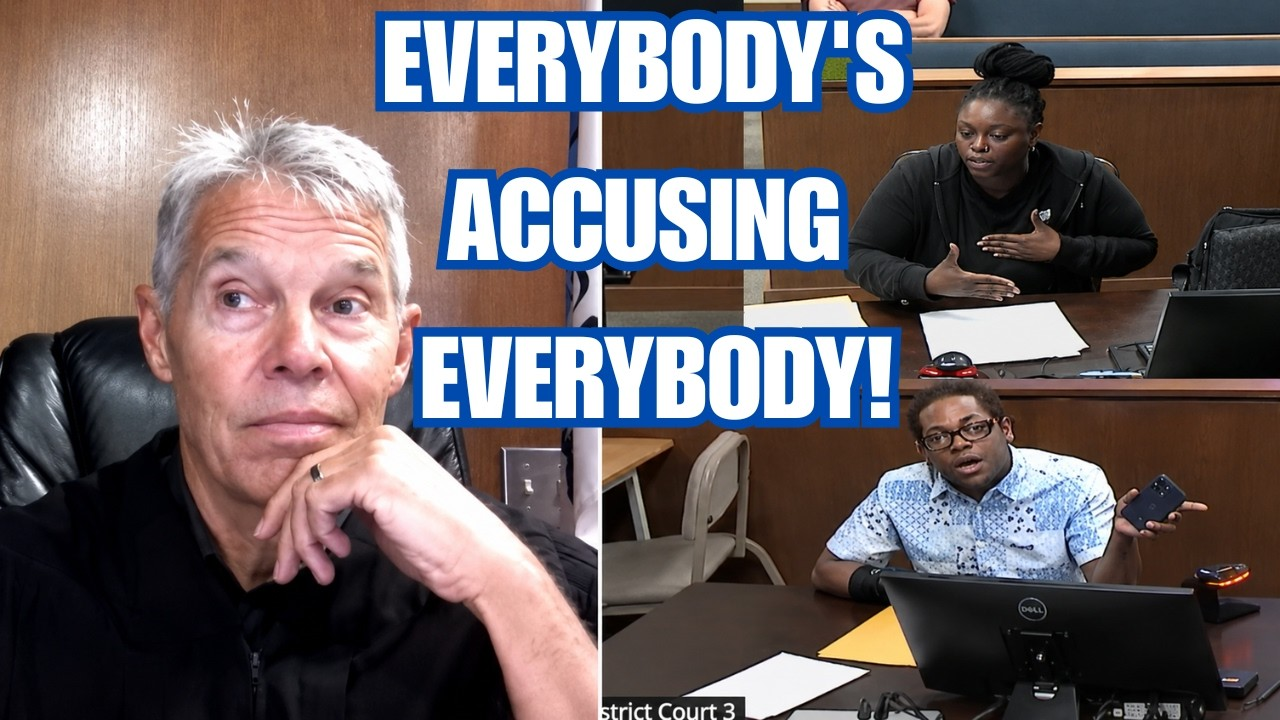
GEORGIA — A Temporary Protective Order (TPO) hearing descended into family drama as two sisters, a pending burglary charge, and a contentious group chat took center stage in a battle between a woman and her sister’s boyfriend.
The proceeding in Civil Court highlighted the complex evidentiary hurdles judges face when family disputes spilled over into digital communications and cross-allegations of criminal conduct.
An Alleged Assault and a Pending Burglary Charge
The petitioner, Miss Harris, appeared in court seeking a protective order against Willie Bailey, the boyfriend of her sister, Shakia.
According to Harris, the feud stems from a May 20, 2026, incident where she went to her sister’s home to check on her nieces and nephews after receiving warnings that they might be in danger. Harris claimed that once inside, an intoxicated Bailey confronted, argued with, and physically assaulted her.
However, the incident resulted in Harris being arrested and charged with criminal burglary after Bailey alleged that she broke into his residence and attacked him. Harris testified that she was invited into the home and maintains her innocence, noting that her criminal trial is scheduled for August 17 in Superior Court.
Harris requested the protective order based on subsequent threatening text messages she claimed were sent by Bailey or relayed through her sister, reading quotes such as:
“I got so much s** on you, you’re going to be losing everything and going to jail… We’re going to see who’s got the last laugh.”*
“She Busted Open the Door”: The Boyfriend’s Defense
When called to testify, Bailey strongly denied ever inviting Harris into the home or sending her threatening text messages after the May altercation.
Bailey presented a vastly different account of the May 20 incident, telling the judge he was recovering from surgery in bed when Harris forced her way inside, leaving visible scratches and gashes on his face that required police and ambulance responses.
“I never offered her to come to my house,” Bailey testified, addressing the judge. “I had surgery, I was laying down in bed… She busted open the door, she just started attacking with the scratches on my face… My kids had to be outside because of her actions.”
Bailey maintained that he had not contacted Harris since the incident, asserting that Harris was the one violating active court orders by reaching out to him and his family members.
The Group Chat Confusion
Upon reviewing the text messages presented as evidence, the judge discovered a crucial discrepancy: the threatening messages were coming from a family group chat involving Harris, her mother, and her siblings—a group chat that Bailey was not a participant in.
Harris conceded that the messages were sent directly from her sister Shakia’s phone number, though she argued that Shakia was sending them on Bailey’s behalf to intimidate her ahead of her upcoming burglary trial.
Because the text messages could not be directly attributed to Bailey, the legal foundation for the protective order collapsed.
Judge Denies Order with a Stern Warning
Delivering the ruling, the judge explained that the court could not settle the disputed facts of the May 20 altercation, as those allegations must be resolved during Harris’s upcoming criminal trial in Superior Court.
Focusing strictly on post-incident contact, the judge ruled that Harris failed to prove Bailey had directly contacted or threatened her.
“I do see that somebody’s been reaching out… It sounds more like your sister rather than Mr. Bailey,” the judge noted, officially denying the protective order.
However, the judge issued a firm warning to Bailey before concluding the hearing:
“Miss Harris has made very clear she does not want you contacting her,” the judge instructed Bailey. “To the extent that you do, she is free to come back in here and say, ‘He contacted me after we had that long conversation in court.’ I’m not going to grant it today, but it could happen in the future.”
The court dismissed both parties, instructing them to maintain total separation as the criminal case proceeds.
Full video: https://www.youtube.com/watch?v=B1SVbzo-U7I