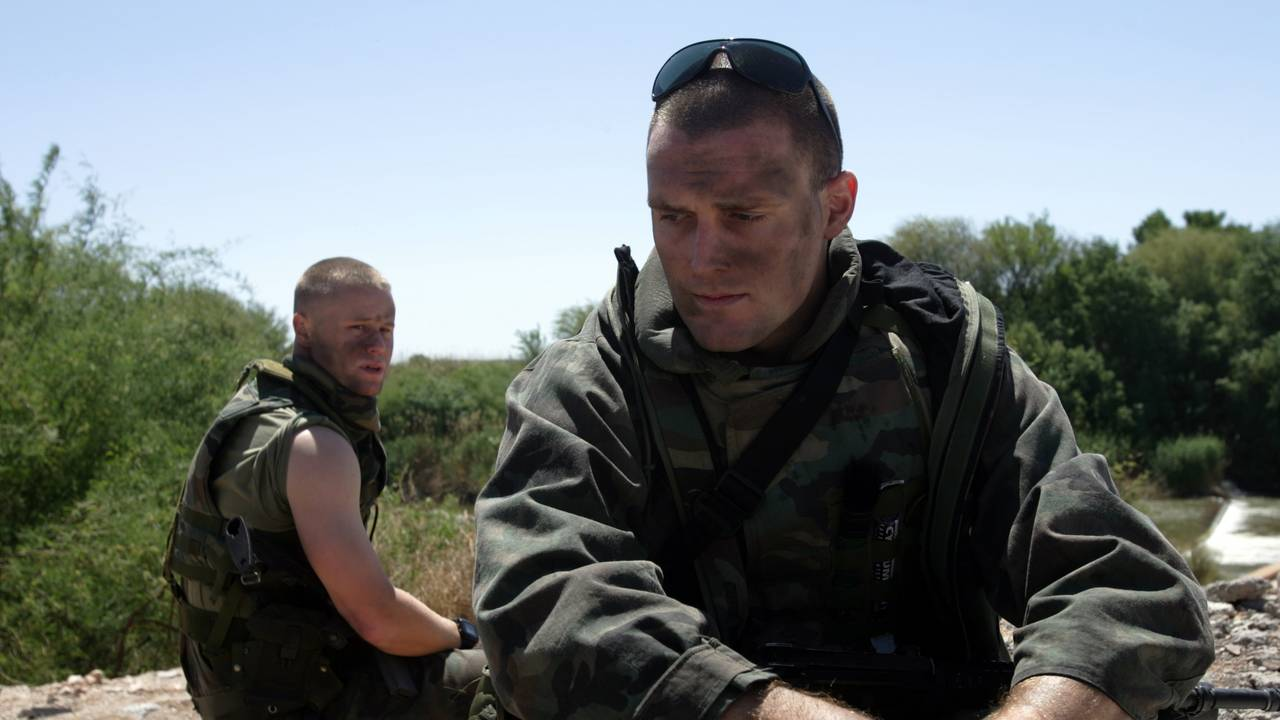
Series Profile: GENERATION KILL (2008)
| Attribute | Details |
| Title | Generation Kill |
| Original Air Date | July 13, 2008 – August 24, 2008 (7 Episodes) |
| Creators / Writers | David Simon, Ed Burns (The Wire) |
| Director | Susanna White, Simon Cellan Jones |
| Source Material | Based on the 2004 book Generation Kill by Evan Wright |
| Genre | Drama, War, Documentary |
| Network | HBO |
| Lead Cast |
• Alexander Skarsgård (Sgt. Brad “Iceman” Colbert) • James Ransone (Cpl. Josh Ray Person) • Lee Tergesen (Evan “Rolling Stone” Wright) • Jon Huertas (Sgt. Antonio “Poke” Espera) • Stark Sands (Lt. Nathaniel Fick) • Chance Kelly (Lt. Col. Stephen “Godfather” Ferrando) • Rudy Reyes (Playing himself) |
| Accolades & Honors | • Primetime Emmy Awards (2009): Won 3 Emmys including Outstanding Sound Editing and Outstanding Sound Mixing; 11 total nominations |
Trailer
Plot Overview
Generation Kill follows the 1st Reconnaissance Battalion of the U.S. Marine Corps during the first wave of the 2003 invasion of Iraq. Embedded with Bravo Company’s Team 1 is Evan Wright (Lee Tergesen), an intrepid reporter for Rolling Stone magazine.
Led by the calm, hyper-competent Sergeant Brad “Iceman” Colbert (Alexander Skarsgård) and the principled Lieutenant Nathaniel Fick (Stark Sands), the Marines navigate the harsh realities of front-line combat. Instead of glorified heroics, the men spend their days facing logistical blunders, supply shortages, erratic command decisions from incompetent superior officers, and the terrifying ambiguity of fighting an unseen enemy in civilian-populated zones.
Key Themes & Production Highlights
-
Unfiltered Realism: Strips away Hollywood melodrama, focusing on the dark humor, boredom, jargon, and tactical confusion experienced by frontline soldiers.
-
Veterans in Front of the Camera: Real-life Recon Marine Rudy Reyes played himself in the series, while several other veterans served as technical advisors to guarantee authenticity.
-
Masterful Writing: Adapted by David Simon and Ed Burns (The Wire), bringing their signature journalistic rigor and institutional critique to modern warfare.