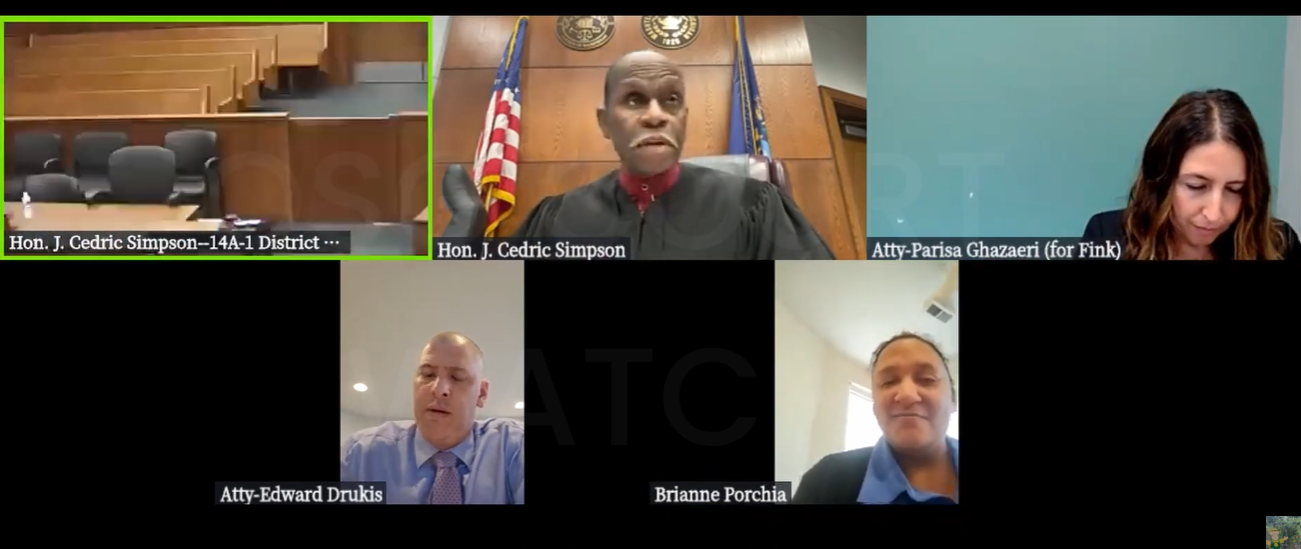
ANN ARBOR, MI — A Michigan district court judge took decisive action to protect a visually impaired woman after learning her landlord had shut off her electricity, leaving her in the dark and cold just days before Christmas.
The emergency intervention by Judge Simpson of Washtenaw County highlights the court’s power to enforce tenant rights and penalize landlords who attempt unlawful “self-help” evictions.
An Empty Courtroom and a Sudden Revelation
The case, Northwood Property v. Brienne Poria, began as a routine eviction hearing. Initially, because the landlord’s attorney failed to appear on the virtual call, Judge Simpson was prepared to dismiss the case.
Before finalizing the dismissal, the tenant, Brienne Poria—who explained she is visually impaired and unable to see the video screen—asked the judge for advice on what to do next. When Judge Simpson explained that a dismissal meant she could stay put for now, Poria asked a question that completely altered the course of the proceedings.
“What about the fact that the power has been turned off prior to ever receiving any paperwork?” Poria asked.
Left in the Cold for the Holidays
Surprised by the revelation, Judge Simpson immediately halted the dismissal to investigate.
Poria testified that on December 19, her landlord completely cut off her electricity. She had been living in her apartment without heat or power for a week. Poria also revealed that two months prior, the landlord had cut off electricity to the back of the house, forcing her to move her bed into the living room and kitchen areas just to stay warm.
Because other tenants in the building still had functioning electricity, Poria was certain her unit’s power loss was a deliberate act of retaliation.
Recognizing the immediate physical danger to a disabled tenant with freezing winter temperatures approaching, Judge Simpson vacated his dismissal. He ordered a recess and demanded that the landlord’s attorney, Edward Duas, appear in court later that afternoon to address the utility shutoff.
The Landlord’s Quick Reversal and Legal Consequences
When the court reconvened at noon, Duas announced that the power to Poria’s unit had been successfully restored. He claimed the shutoff was merely a “mistake” due to a billing confusion involving multiple units on the property.
However, Poria countered that she had contacted her landlord directly when the power went out, and the landlord was fully aware of the situation but chose to do nothing.
While Duas tried to argue that Poria had not paid her $500 monthly rent since her lease expired in August, owing a balance of $3,480, Judge Simpson made it clear that the landlord’s alleged actions were a severe violation of Michigan’s anti-lockout laws.
Under state law, landlords are strictly prohibited from shutting off utilities to force a tenant out. Violations can carry heavy financial penalties, often starting at a statutory minimum of $200 per day for every day the tenant is left without utilities.
“If she’s without power for those nine days, your client may very much owe about $1,800 minimum to the defendant,” Judge Simpson warned the landlord’s attorney. “She may indeed end up owing her more. So why would I have her pay escrow at this point in time?”
Next Steps
Refusing to let the landlord off the hook for the unlawful shutoff, Judge Simpson ordered the eviction case to be moved to an in-person hearing on January 10, 2025.
The judge instructed both parties to appear at the Washtenaw County courthouse to fully resolve the issues surrounding the illegal utility shutoff and the unpaid rent. In the meantime, Duas expressed a strong desire to negotiate a settlement with Poria before they stand back in front of the judge.