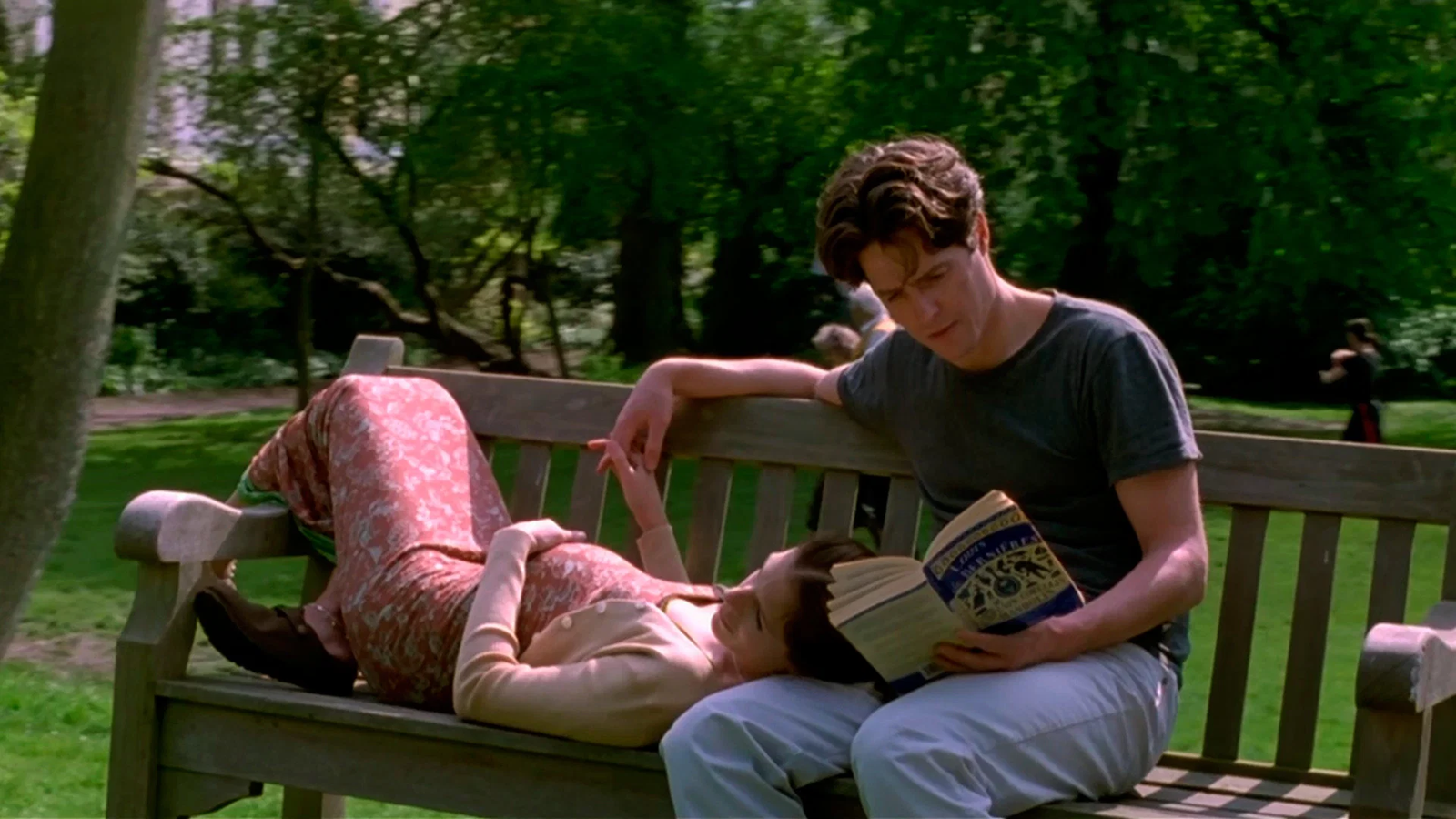
Movie Profile: NOTTING HILL (1999)
| Attribute | Details |
| Title | Notting Hill |
| Release Date | May 21, 1999 (UK) / May 28, 1999 (USA) |
| Director | Roger Michell |
| Writer | Richard Curtis |
| Genre | Romance, Comedy, Drama |
| Runtime | 124 minutes |
| Budget | $42 million |
| Box Office | $363.8 million worldwide |
| Lead Cast |
• Julia Roberts (Anna Scott) • Hugh Grant (William Thacker) • Rhys Ifans (Spike) • Emma Chambers (Honey Thacker) |
| Major Accolades |
• BAFTA Awards: Won the Audience Award for Most Popular Film; Nominated for Alexander Korda Award for Outstanding British Film. • Golden Globe Awards: Nominated for 3 awards, including Best Motion Picture – Comedy or Musical, Best Actor (Hugh Grant), and Best Actress (Julia Roberts). |
Trailer
Plot Overview
William Thacker (Hugh Grant) is a quiet, divorced travel bookstore owner living in the vibrant, eclectic London neighborhood of Notting Hill. His mundane life—filled with eccentric friends and his bizarre Welsh flatmate Spike (Rhys Ifans)—is turned upside down when international superstar actress Anna Scott (Julia Roberts) walks into his shop to buy a book.
A few minutes later, William accidentally collides with Anna on a street corner, spilling orange juice all over her clothes. He offers his nearby house for her to change, leading to an impulsive, unexpected kiss that sparks an unlikely romance between a global icon and an ordinary retail worker.
As their relationship deepens, the couple must navigate the crushing weight of paparazzi intrusion, Hollywood press junkets, and the vast cultural divide between a glamorous movie-star life and a quiet London existence. After multiple misunderstandings and periods of separation, the film builds to a famous climax where Anna returns to the bookstore, delivering one of cinema’s most iconic confessions: “I’m also just a girl, standing in front of a boy, asking him to love her.”
Cultural Impact & Legacy
-
The Peak of 90s Rom-Coms: Written by Richard Curtis (the mastermind behind Four Weddings and a Funeral and Love Actually), Notting Hill became the highest-grossing British film in cinema history at the time of its release and solidified Hugh Grant as the quintessential romantic lead.
-
Meta-Casting Masterstroke: The casting of Julia Roberts—who was genuinely the biggest female movie star in the world in 1999—playing a character dealing with the suffocating nature of global fame created a perfect, self-aware meta-narrative that fascinated audiences.
-
The Soundtrack Phenomenon: The film catapulted Ronan Keating’s cover of “When You Say Nothing at All” and Elvis Costello’s version of “She” into massive global chart-toppers, forever linking the songs to the movie’s emotional highlights.