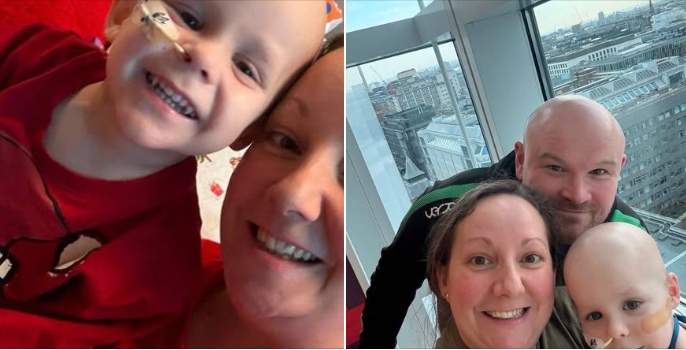
For Sarah and her family from Griffithstown, Wales, life transformed in a matter of days after maternal intuition led to the discovery of an aggressive, high-risk childhood cancer in her young son, Teddy.
Once a vibrant and energetic child, Teddy suddenly began experiencing unexplained physical symptoms, including poor appetite and difficulty maintaining his daily routines. Initial clinical evaluations suggested his symptoms were tied to a routine, benign childhood ailment.
However, convinced that something far more serious was occurring, Sarah continued to monitor her son closely. While gently massaging Teddy’s abdomen to soothe his discomfort, she detected a distinct, worrying abdominal mass.
Although preliminary medical feedback suggested the lump might be a simple bowel buildup, subsequent diagnostic imaging and biopsies revealed a devastating reality: Teddy was diagnosed with stage 4 neuroblastoma—a rare and aggressive pediatric cancer arising from embryonic nerve cells (neuroblasts).
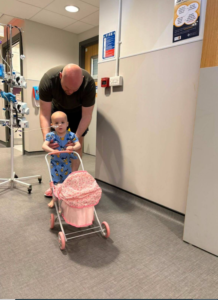
A Sudden, High-Stakes Battle
The diagnosis shook the family to its core. Sarah described the moment specialists confirmed the malignancy as “earth-shattering,” a realization that forever altered their everyday lives.
Medical assessments revealed that the primary tumor had expanded significantly, occupying a large portion of Teddy’s abdominal cavity, exerting pressure on vital organs, and metastasizing to his bone marrow.
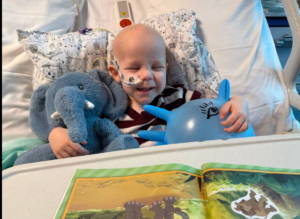
Teddy immediately embarked on an intensive multimodal oncology protocol, including high-dose chemotherapy, major abdominal surgery, and complex immunotherapy cycles complicated by adverse side effects. Throughout the arduous treatments, his family notes that Teddy has maintained a remarkably brave spirit, earning him the affectionate nickname “social butterfly” among hospital staff and loved ones.
The Pursuit of Specialized Maintenance Therapy (DFMO)
Having navigated the primary treatment phases, Teddy’s family is now focused on mitigating the high risk of relapse associated with stage 4 neuroblastoma.
To provide him with the best long-term outcome, his parents are seeking access to DFMO (difluoromethylornithine), a targeted maintenance medication designed to reduce the recurrence rates of high-risk neuroblastoma. Because the drug is currently unavailable through their standard public healthcare pathway, the family must fund the treatment privately at an estimated cost of £250,000.
Determined to explore every possible avenue for their son, Sarah and her family launched a public fundraising appeal. The campaign has sparked a massive wave of community support, drawing donations and encouragement from thousands of people across the region.
Beyond the financial goal, Teddy’s journey serves as a powerful reminder of the life-saving importance of parental intuition, the resilience of young patients, and the strength of community solidarity during a family’s hardest trial.