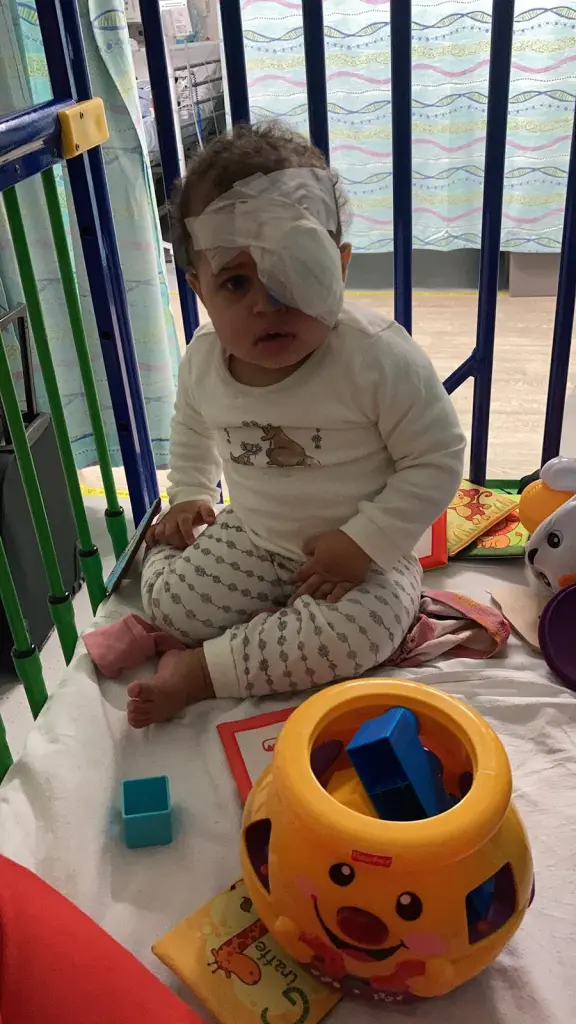
SPECIAL REPORT: HEALTHCARE & SURVIVORSHIP — What initially appeared to be a minor, common eye irritation gradually unfolded into an unimaginable medical trial for one family after their infant daughter was diagnosed with an aggressive form of pediatric eye cancer.
Katherine O’Neill first observed that her daughter, Amelia, born in September 2020, frequently rubbed her left eye. During several early pediatric evaluations, clinicians attributed the localized redness to benign causes, such as infant eczema, while a subsequent assessment suggested it might be a harmless vascular birthmark. Because Amelia had passed her routine newborn vision screening, identifying the underlying pathology proved exceptionally challenging.
Given that Amelia was born prematurely alongside a twin sibling, she attended frequent developmental checkups. Throughout these visits, Katherine consistently voiced concerns regarding her daughter’s persistent eye rubbing.
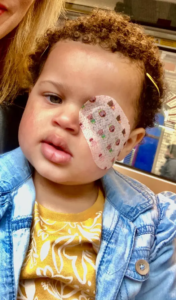
A Pivotal Observation
A breakthrough occurred when Amelia reached six months of age. While she was seated in her highchair during dinner, her grandmother noticed an unusual reflection within the pupil under the kitchen lighting.
Prompted by this observation, Katherine brought Amelia to a physician the following morning. Following a preliminary physical examination, the doctor issued an urgent specialist referral, cautioning that the underlying issue could be a pediatric cataract or retinoblastoma—a rare and severe childhood eye cancer.
Subsequent diagnostic imaging by ocular oncologists confirmed the diagnosis: Amelia had a Grade E retinoblastoma, an advanced tumor localized within the retina of her left eye.
Retinoblastoma develops in the light-sensitive retinal tissue at the back of the eye. Because its early clinical markers frequently mimic common pediatric conditions—such as strabismus or minor irritation—diagnosis is often delayed until visual changes or a distinctive white pupillary reflex become apparent.
Navigating Treatment and Surgery
Amelia immediately embarked on an intensive therapeutic regimen, completing six cycles of systemic chemotherapy over several months. Although the primary tumor initially regressed, subsequent monitoring revealed disease progression, necessitating targeted intravitreal chemotherapy injections directly into the eye.
Faced with the profound decision of preventing systemic metastasis, Katherine opted for enucleation—the surgical removal of Amelia’s left eye—to ensure complete eradication of the cancer.
In December 2021, Amelia successfully underwent the procedure and was subsequently fitted with a custom ocular prosthesis.

A Thriving Future and Parental Advocacy
Today, Amelia is thriving as an energetic young girl. She delights in playing at the park, assisting in the kitchen, socializing with friends, spending quality time with her grandmother, and watching her favorite television shows.
By sharing Amelia’s medical journey, her family aims to empower parents to trust their instincts and advocate for secondary medical evaluations when subtle symptoms persist.
Amelia’s story serves as a poignant reminder that early detection saves lives, and that remarkable resilience can emerge from the most challenging medical beginnings.