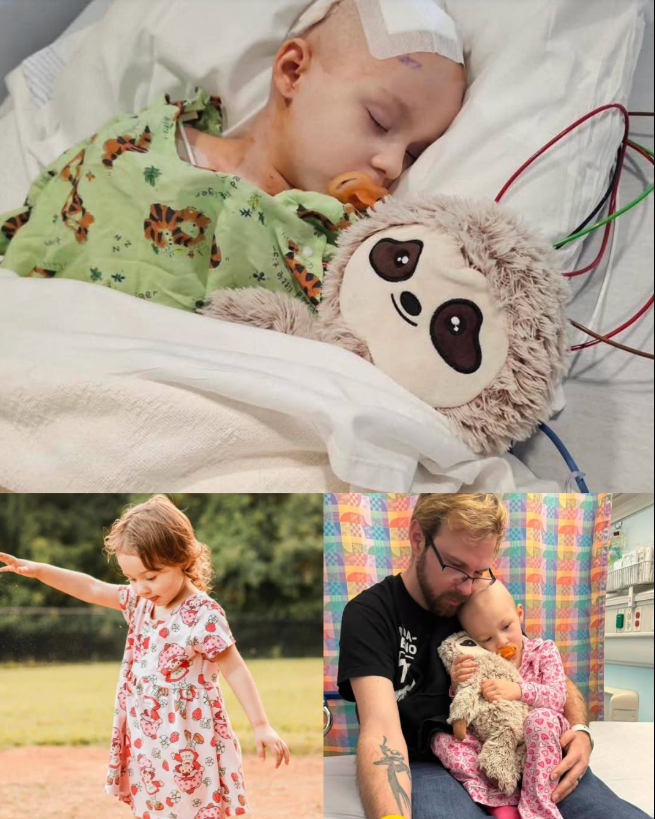
For nearly a year, 3-year-old Jade and her mother, Amber, navigated a rigorous treatment regimen following a diagnosis of orbital rhabdomyosarcoma—a rare, highly aggressive pediatric soft-tissue sarcoma originating behind her left eye.
Because orbital rhabdomyosarcomas develop in close proximity to critical ocular structures, the optic nerve, and the skull base, standard treatment requires a multi-modal protocol consisting of multi-agent systemic chemotherapy and targeted radiation therapy to eradicate local tumor cells while preserving vision.
Orbital Rhabdomyosarcoma Clinical Progression:
├── Primary Diagnosis    ──► Orbital Soft-Tissue Mass behind Left Eye
├── Active Treatment     ──► Multi-Agent Chemotherapy & Ocular Radiation Therapy
├── Treatment Completion ──► Final Chemotherapy Session Completed (May 14)
└── Post-Treatment Watch  ──► Onset of Neurological Symptoms & Rapid Re-Evaluation (May 30)
A Promised Milestone
Throughout nearly twelve months of clinical interventions, interim diagnostic imaging demonstrated positive treatment response, showing substantial reduction in tumor volume without evidence of systemic metastasis.
On May 14, Jade officially completed her final scheduled chemotherapy cycle—a milestone celebrated by her family and care team as the culmination of months of intensive inpatient and outpatient care.
Sudden Onset of Post-Treatment Neurological Symptoms
However, just 16 days after concluding her primary therapy, Amber observed subtle clinical changes in her daughter, including increased squinting, persistent headaches, lethargy, and loss of appetite.
By May 30, Jade exhibited more acute neurological signs, including gait instability (walking sideways) and abnormal ocular movements, prompting immediate emergency medical re-evaluation.
Pediatric neuro-oncologists emphasize that sudden post-treatment neurological changes require urgent diagnostic neuro-imaging (contrast-enhanced MRI) to evaluate for potential local recurrence, radiation-induced edema, or secondary central nervous system complications.
Jade’s care team is conducting comprehensive evaluations to determine the underlying cause of her symptoms, while her family continues to advocate for her care and recovery.