MATERNITY & HEALTH REPORT — Throughout every trimester of her high-risk pregnancy, Taylor Plemmons was confronted with the same heartbreaking prediction: doctors warned that her unborn baby girl would likely not survive until her next prenatal appointment.
Yet, faced with grim prognoses and overwhelming odds, Taylor steadfastly refused to accept that tragic outcome. “I just knew she was going to be okay,” Taylor recalled. “I kept telling my husband, ‘I don’t accept that. That’s not going to be our story.'”
Her determination bore fruit on January 12, when little Margot Louise Plemmons was born via an emergency delivery at just 29 weeks and 1 day, weighing a fragile 1.7 pounds (770 grams).
A History of Heartbreak and Severe Complications
The path to Margot’s birth was marred by years of grief and medical uncertainty. Following the birth of their first daughter, Scottie, Taylor endured three consecutive unexplained miscarriages. When she conceived again, the family hoped for a smooth journey, but severe complications emerged early on.
At 10 weeks, Taylor suffered a massive hemorrhage caused by a large subchorionic hematoma, followed by three additional terrifying episodes of heavy bleeding. By 19 weeks, routine scans revealed severe fetal growth restriction, with Margot falling below the 1st percentile for gestational age by week 20.
Taylor was hospitalized at 23 weeks for continuous monitoring as medical teams repeatedly cautioned the couple to prepare for the worst. On top of the constant anxiety over Margot’s survival, Taylor faced the emotional strain of being isolated from her toddler, Scottie, who was too young to comprehend her mother’s prolonged absence.
The crisis reached its peak when Taylor developed HELLP syndrome—a rare, life-threatening complication of severe preeclampsia. To preserve both mother and baby, obstetrics teams performed an immediate premature delivery.
A “Feisty” Personality in the NICU
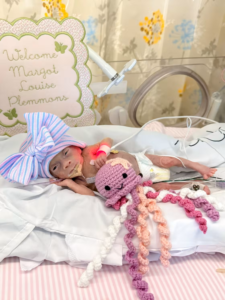
Following delivery, Margot was immediately transferred to the Neonatal Intensive Care Unit (NICU) to receive specialized respiratory and nutritional care.
Despite her diminutive size, Margot quickly earned a reputation among hospital staff for her extraordinary resilience. “Everyone laughs about how feisty she is,” Taylor shared with a smile. “If you bother her, she’ll start swinging. She’s definitely got a little personality.”
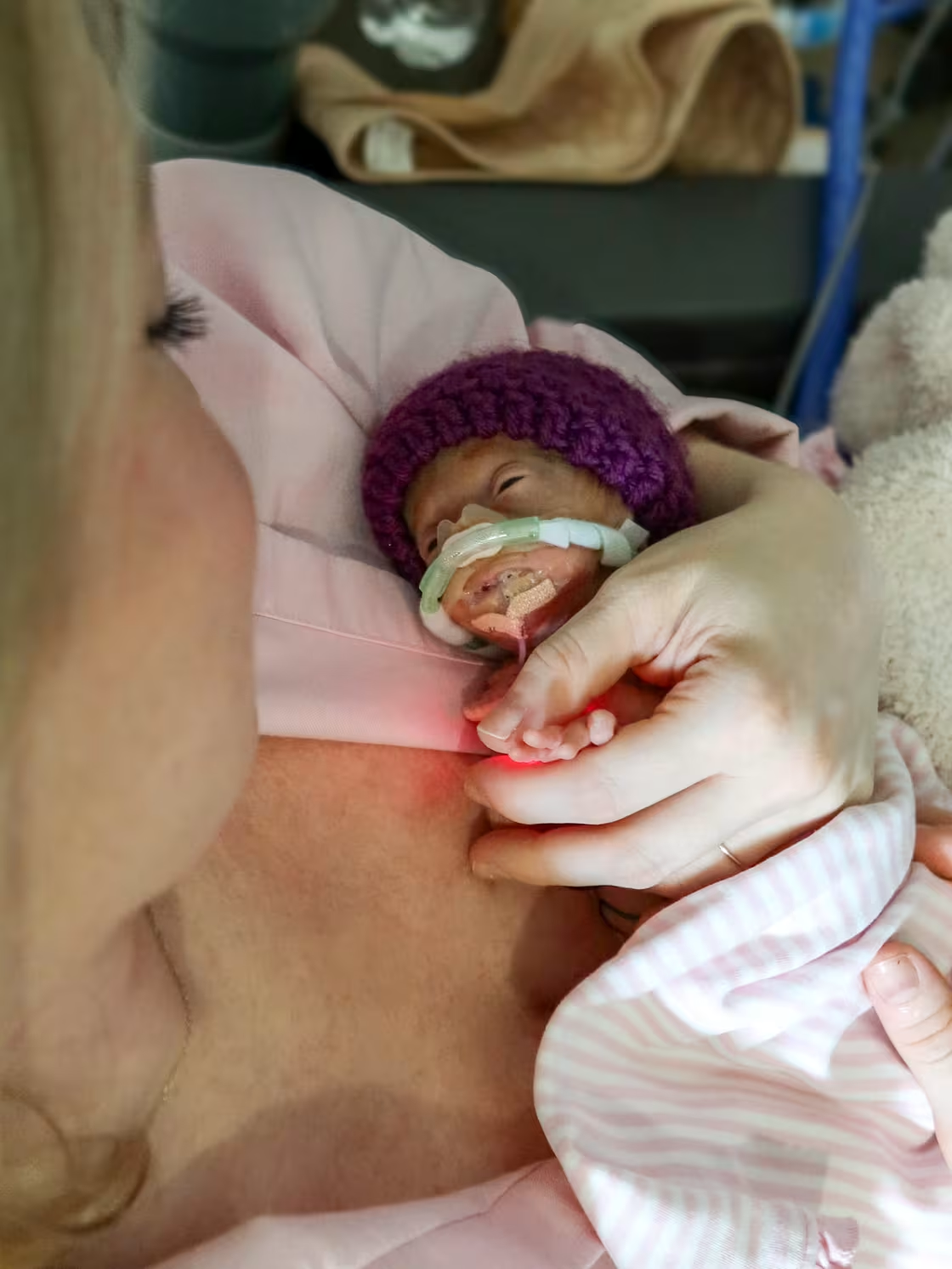
Five days post-birth, Taylor experienced the long-awaited milestone of skin-to-skin contact. “When I finally held her and felt her breathing against me, for the first time in a very long time… I could finally breathe too,” she wept.
Inspiring Families in the NICU Community
While Margot is projected to remain under NICU care for several months to reach key developmental and weight milestones, her steady progress has brought immense relief to her family.
Taylor now actively shares their experience publicly to advocate for and comfort other parents navigating pregnancy complications, pregnancy loss, and extended hospital stays.
“Even though none of us wants to be part of this club,” Taylor reflected, “we’re here—and we’re going to support one another.”
Little Margot Louise’s journey stands as a poignant reminder of maternal instinct, resilience, and the enduring power of hope during life’s most uncertain trials.
If you need any modifications to the style, length, or formatting, feel free to let me know!