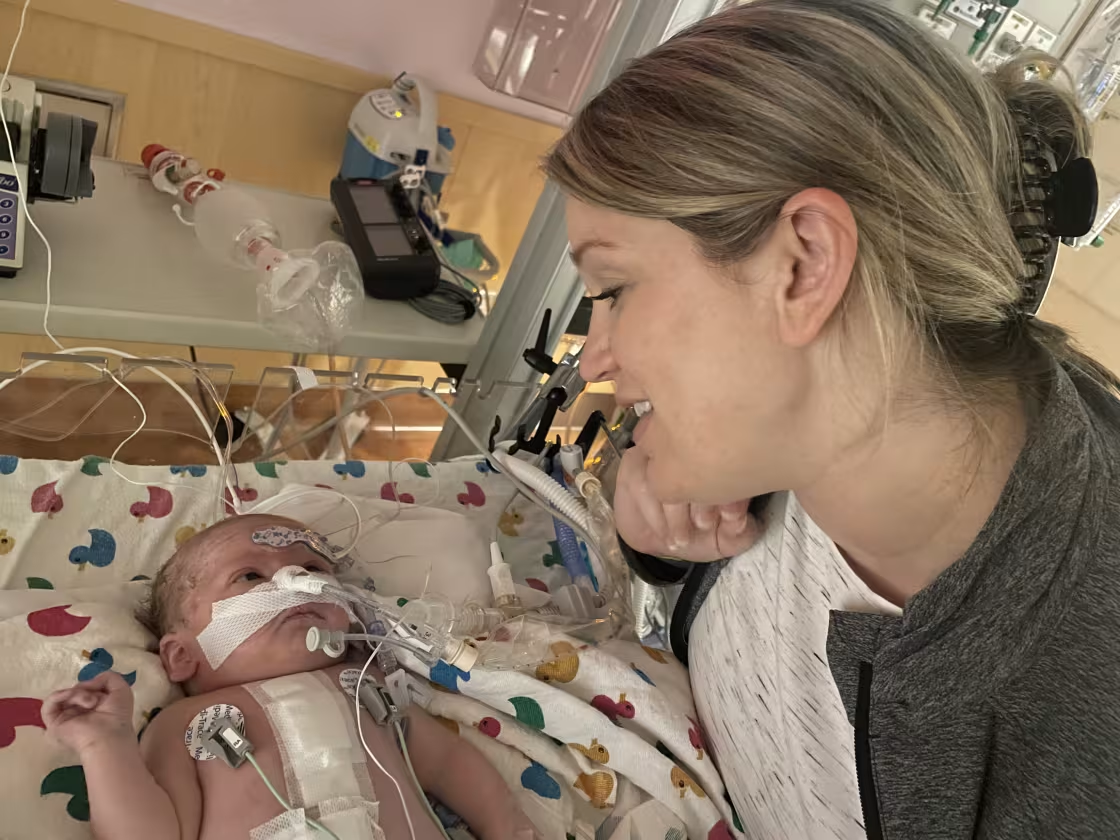
MEDICAL BREAKTHROUGHS — Long before he took his very first breath, Brooks Klingsporn had already made medical history by undergoing one of the rarest and most complex cardiac procedures ever performed on an unborn child. Today, at 18 months old, the cheerful toddler is thriving, full of energy, and reaching developmental milestones that once seemed utterly out of reach.
For parents Lauren and Alex Klingsporn, who were already raising two healthy children, their third pregnancy initially appeared entirely routine. Early genetic screenings returned clear, and all signs pointed toward a smooth journey.
However, a routine 20-week anatomy scan revealed a terrifying anomaly: the left side of their baby’s heart was failing to develop.
A Fatal Diagnosis and a High-Stakes Gamble
Pediatric cardiologists confirmed that Brooks suffered from Hypoplastic Left Heart Syndrome (HLHS)—a severe congenital defect in which the heart’s left structures are severely underdeveloped. Compounding the danger, Brooks also had a restricted atrial septum, a critical blockage that prevented normal blood circulation between his heart and lungs while still in the womb.
Without intervention, doctors warned that the damage to his organs prior to birth would be too catastrophic for post-natal surgery to save him.
Faced with the crushing options of either preparing for comfort care or hoping he survived until delivery, Lauren and Alex sought a second opinion at Texas Children’s Hospital. There, specialists presented a rare and risky alternative: fetal cardiac surgery.
At 30 weeks gestation, while Lauren remained conscious under an epidural, a multidisciplinary surgical team executed the delicate five-hour procedure. Guided by high-resolution continuous ultrasound, surgeons inserted a needle through Lauren’s abdomen and uterus directly into the fetus’s tiny heart. Using specialized laser technology, they created a precise opening and deployed a miniature stent to restore critical blood flow.
“When they explained what they were going to do, it was absolutely mind-blowing,” Lauren reflected.
An Emergency Arrival and Overcoming the Odds
The fetal surgery was a resounding success, allowing Brooks’ lungs to begin recovering in utero. However, at 36 weeks, suspected signs of a heart clot prompted an emergency delivery protocol.
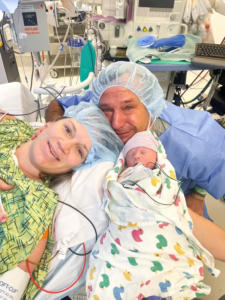
The birth was fraught with danger. Following a difficult labor induction, Lauren suffered a severe placental abruption, resulting in an emergency C-section and a loss of nearly two liters of blood that required immediate transfusion. Meanwhile, newborn Brooks was rushed straight to intensive care.
Subsequent scans delivered an overwhelming wave of relief to his father, Alex: the suspected blood clots were non-existent. “When they told me everything looked good, I dropped to my knees and cried,” Alex recalled.
At just four days old, Brooks successfully underwent the first of three planned open-heart surgeries designed to re-route his circulatory system and allow the right side of his heart to handle systemic blood flow.
A Long Road to Recovery and a Bright Future
Brooks endured a grueling 179-day stay in the Intensive Care Unit before finally being discharged home. Due to his extended hospitalization, developmental milestones such as sitting up, playing, and eating independently arrived later than usual—yet he conquered each one with remarkable persistence.
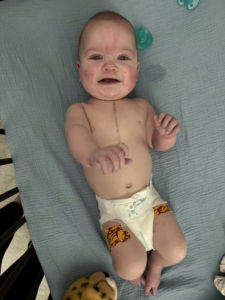
To stay close to the specialized medical care that saved their son, the Klingsporn family relocated from Dallas to Houston. Now 18 months old, Brooks is stable, vibrant, and has recently enrolled in daycare to enjoy a full, active childhood alongside his older siblings. Medical teams project his third and final planned heart surgery will take place around age four.
“They’ve given us hope that Brooks will grow up with his brother and sister,” Lauren shared. “For that, we’ll always be grateful.”
Brooks’ remarkable survival stands as a testament to the frontiers of fetal medicine, modern surgical innovation, and the enduring resilience of a family that refused to give up hope.